
Madison County's Most Wanted Program
The Madison County Sheriff's Most Wanted page is the county's closest public warrant program. It is curated with care. The Sheriff's office does not call it a full active-warrant index, and it posts no size count, selection criteria, reward policy, update schedule, or removal timetable. Treat the screen as a sample. The controls Madison County provides are still helpful. Visitors can switch among Name, Current, and Arrested, sort by newest or oldest, search a first or last name, and show all available entries. Those labels belong to this program alone. A clerk's service status, a jail custody label, and a traffic system's warrant flag each follow their own rules, so match the label to its source.
The Madison Most Wanted Interface
The interface splits the Madison County program into Current and Arrested tabs. That split describes the Sheriff's public display. It does not describe every open judicial process. Search and sort tools only filter the chosen entries. A blank result has several causes. It may mean no matching public profile, a spelling difference, or an entry outside this curated program. The official Sheriff's program page shows the Current and Arrested controls a visitor will actually meet.
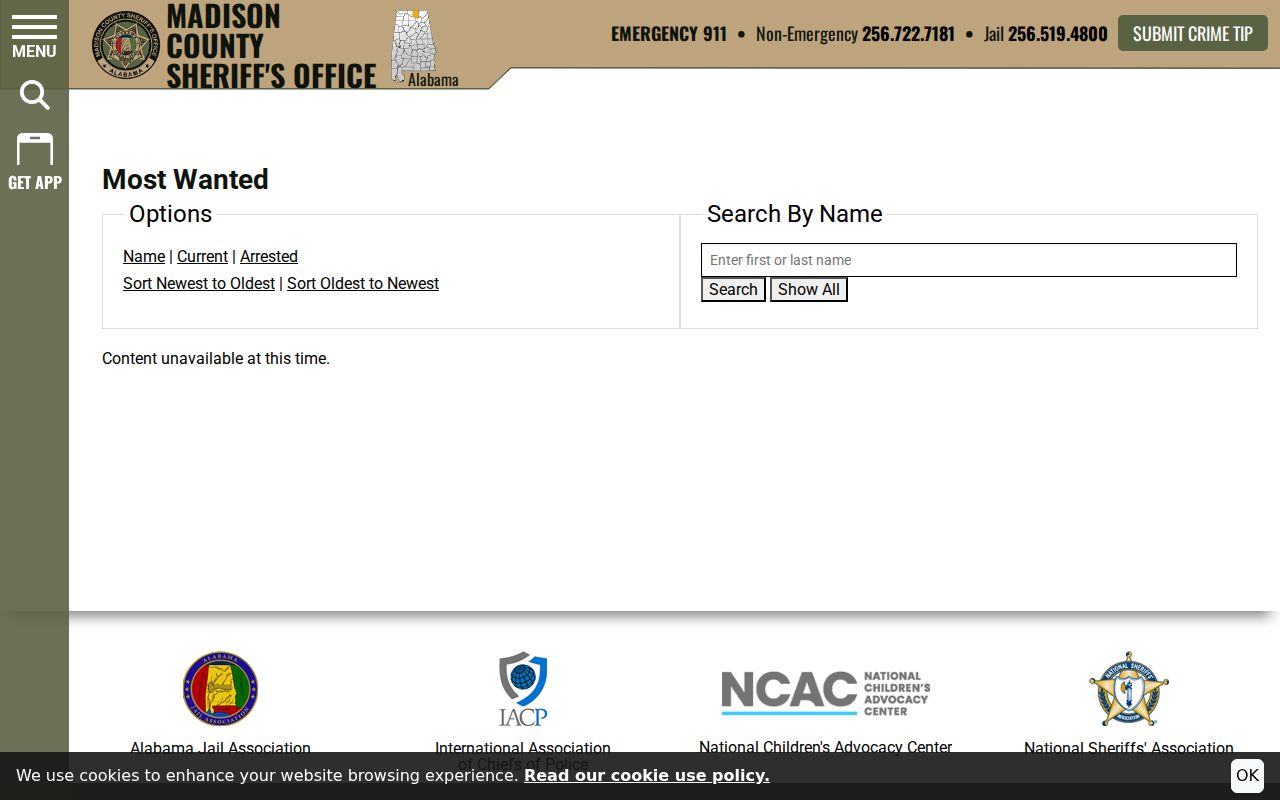
A controls-only view keeps attention on process. Visit the live Madison County source for current public information, and confirm anything that matters with the court or sheriff.
How the Most Wanted Lists Work
A warrant record starts with a judge's signature. The Sheriff's most wanted program then selects a few names for public safety display, a related but separate function. Related functions, different record sets. Madison County's warrant magistrate adds a rule that matters: an arrest warrant is not public until it has been served, so no public page can inventory every unserved warrant. Status can change after service, arrest, recall, or a court order. The page may lag the court file. For an official answer on a case, use the issuing court and the Madison County Circuit Clerk. The clerk keeps District and Circuit records. City cases stay in municipal court. A person's matter may sit in an office the sheriff's page never touches.
Why Madison County's Disclaimer Matters
The Sheriff's Most Wanted disclaimer is practical advice. It warns that information may be wrong and is not an official record. Then it points readers toward the official Circuit Clerk files. Names repeat. The Madison County program can lag a court event, and a page can go down temporarily, so the Clerk's file settles the question, and the disclaimer itself appears on the Sheriff's official page.
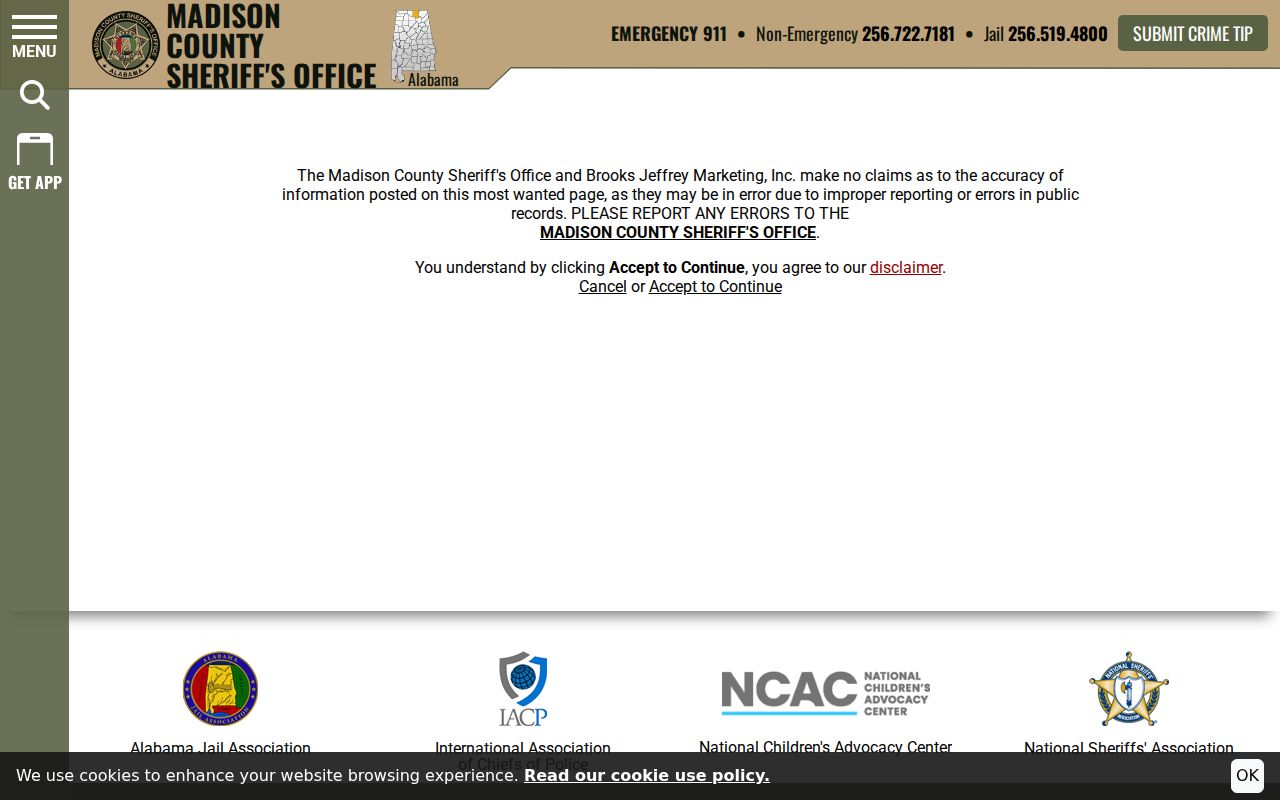
The notice supports a two-step method in Madison County: read the Sheriff's public alert first, then verify the case with the office that keeps the official file.
Reporting a Tip Safely
The Sheriff's program posts the crime-tip number 256-533-8820. Use that official Madison County channel, give only what you personally observed, say when and where, and let trained officers decide the response. Call 911 for an immediate emergency. The Sheriff's non-emergency line, for matters that can wait, is 256-722-7181.
- Do not approach, follow, threaten, or try to detain a listed person.
- Move to a safe place before making the call.
- Report a location, direction of travel, vehicle, and time only when personally observed.
- Do not publish private addresses or repeat an unverified identity on social media.
- Tell the call taker about immediate danger, weapons, or medical needs without speculation.
The Madison County sheriff chooses which profiles to publicize. Only the issuing court can confirm the case behind one.
Madison County List Versus Jail Roster
The current inmate roster answers a custody question. It tracks booking status. Its Current filter refers to custody, not warrant status. Charge text may use the word warrant, but the roster is not a list of every unserved warrant, and its Current tab is not the Most Wanted Current tab. Someone can have a Madison County court matter and appear in neither interface. The official roster page shows its search, sort, and pagination controls.
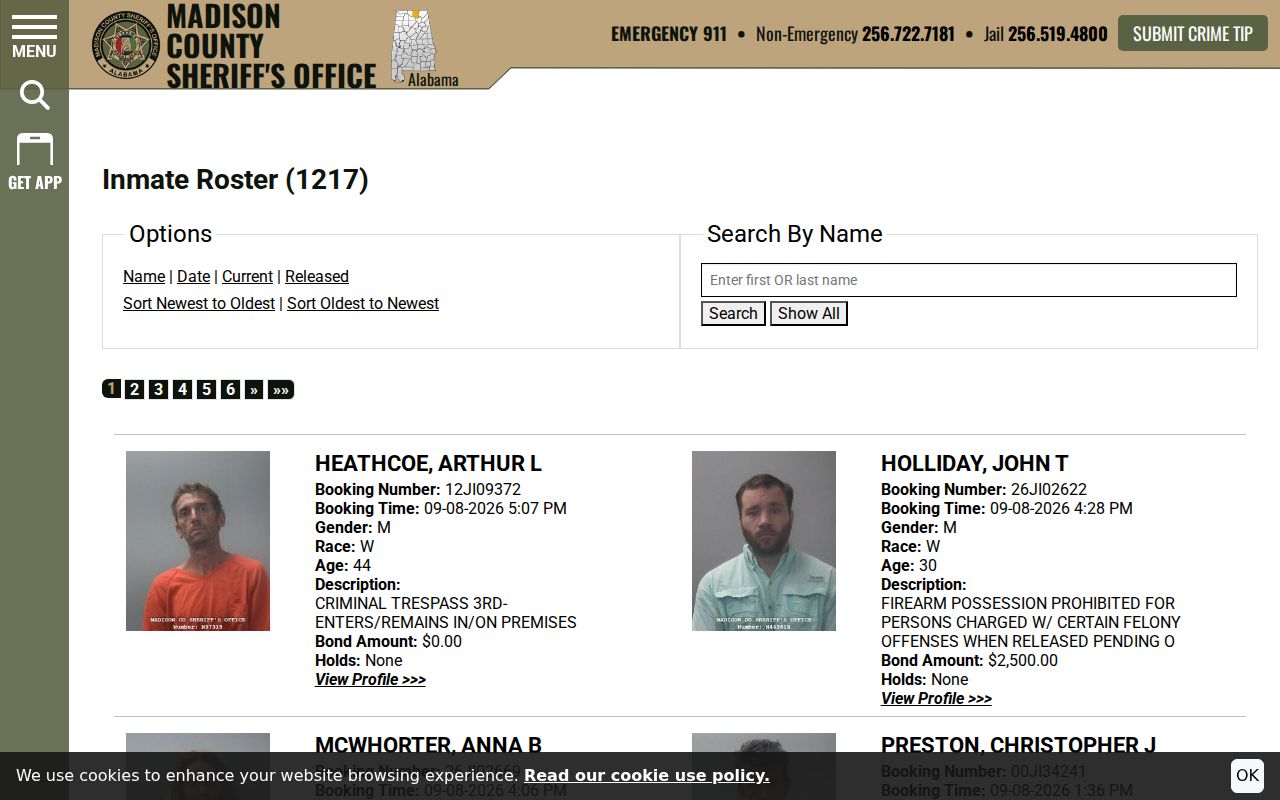
That distinction prevents a common mistake in Madison County: treating current custody as the same thing as current warrant status. Check what a label means before trusting it.
Most Wanted Lists vs Active Warrants
| Source | What It Represents | Main Limit |
|---|---|---|
| Most Wanted | Selected Sheriff's public program | Not a complete warrant list |
| Inmate roster | Current or released booking records | Custody is not warrant status |
| Circuit Clerk file | District or Circuit court record | Access and privacy rules apply |
| Municipal court | City traffic, ordinance, misdemeanor case | Separate from county clerk search |
| Traffic Service Center | Ticket resolution status | Not a statewide warrant database |
An active warrant means a court order stands open. A most wanted entry means the sheriff picked it. The two can overlap in Madison County, but a most wanted profile and an open warrant are not interchangeable records.
When the Madison List Is Unavailable
A Most Wanted page that will not load tells you very little. It does not prove the program ended, and it does not prove a Madison County warrant has cleared. Try the official site again later, call the Sheriff's Office, or turn to the right court channel. The county magistrate sits in Room 217 at 100 Northside Square and can be reached at 256-532-3611. Anyone who suspects an active arrest warrant should report to the Sheriff's Annex at 705 Wheeler Avenue. Before you go, ask what identification and steps the office requires. Legal advice is worth considering too. District and Circuit criminal records are available through the Circuit Clerk. City matters belong instead to Huntsville, Madison, New Hope, Triana, Owens Cross Roads, or whichever municipal court issued the warrant. Madison County residents have several doors; use the one that fits the case.
If You Think You Are Listed
Skip the screenshots and reposts. A name-only match proves nothing either way. Open the live official page for Madison County and compare the few identifying details it gives, then reach the issuing court, the Circuit Clerk, or the Sheriff's official channel. Ask for the case number, court, status, any public bond information, and the approved way to respond.
- Preserve the official URL and note when it was viewed.
- Confirm identity and case jurisdiction with the official office.
- Ask whether the process is served, active, recalled, or otherwise restricted from disclosure.
- Discuss surrender, bond, appearance, or a court motion with an attorney when needed.
- Obtain direct confirmation after any court action.
Safety note: Do not visit an unknown location based on a third-party claim. Call an official court or sheriff number first.
Madison County and Federal Boundaries
A local Most Wanted program is not a federal fugitive list. Federal matters run through the Northern District of Alabama and the U.S. Marshals, including the Gulf Coast Regional Fugitive Task Force's Huntsville presence. A Madison County listing cannot confirm federal status. A federal case cannot be settled in a municipal traffic court either. Alabama also runs law-enforcement information systems, but none of them is one public statewide warrant search. Public options include county and municipal records, paid Just One Look docket access, the Traffic Service Center, and ALEA's separate curated alert material. Each tool has its own scope. For your own suspected Madison County warrant, the event location and the issuing court point to the best route.